Last updated: July 22, 2025
Something I've been wanting to write about is how to approach caregiver engagement strategically rather than just throwing everything at the wall. I see so many agencies (maybe yours too?) wanting to do it all: answer phones, pick up shifts, clock in on time, refer friends. We want it all and we want it now!
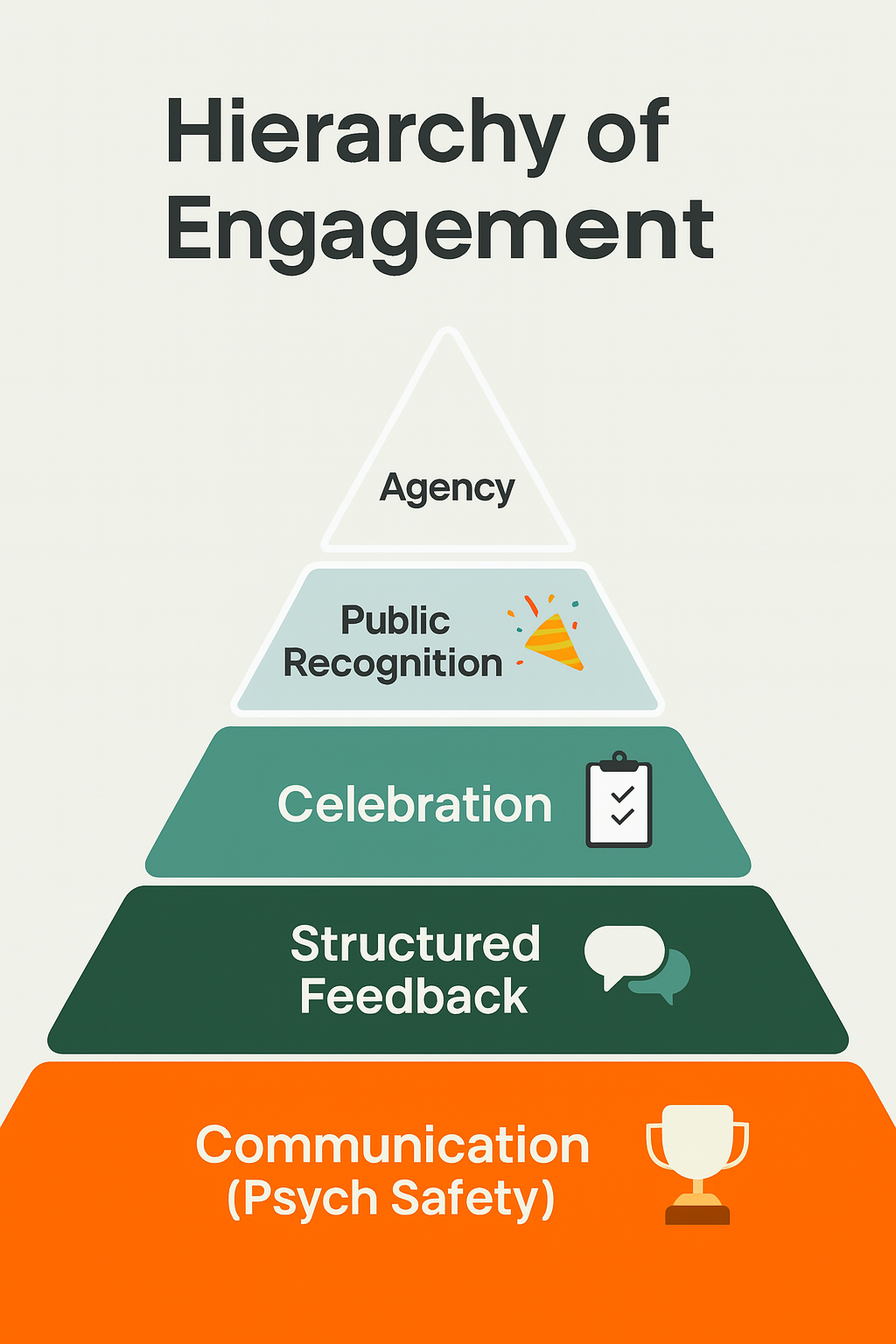
But here's what I've learned: engagement works like Maslow's hierarchy of needs. You have to build the foundation before you can reach the peak.
Level 1: Psychological Safety = Communication
The #1 complaint caregivers report in pulse surveys? Inability to reach management with concerns. This inevitably leads to the #1 source of turnover: scheduling issues, usually because someone wants to change their schedule or get more hours but struggles with communication.
I know what you're thinking - "but our phones and doors are always open!" And I believe you! But leadership is repetition. As legendary adman David Ogilvy said: "You aren't advertising to a standing army; you are advertising to a moving parade."
Best Practices:
Create recurring workflows documenting exactly how caregivers can reach you
Use templates like "Daily Motivation Message" and "Policy Update Announcement"
Repeat your open-door policy weekly, not just at onboarding
Set up automatic reminders about your communication channels
Level 2: Safety Needs = Structured Feedback
Safety for caregivers means having a voice on issues that matter to them, even when we might not want to hear what they have to say. This is where strategic surveying comes in.
Best Practices:
Implement milestone check-ins: First Week, 30/60/90 days
Ask the "uncomfortable" questions: How can we improve? Do you have enough hours? Do you feel comfortable with your assigned clients?
Survey after key events: first shift with new client, 5 days without assignment
Use "Availability Update Survey" and "Shift Preference Survey" templates regularly
Level 3: Love & Belonging = Celebration
This is where we show caregivers how much we care. These folks work hard, and we want to celebrate them every chance we get.
Best Practices:
Automate birthday and work anniversary rewards
Spot rewards for: client compliments, training completion, picking up open shifts
Use holiday celebration templates throughout the year
Public recognition in your social feed when possible
Level 4: Esteem = Public Recognition
Caregivers are proud of their work. Highlight them as much as possible. Goal center rewards are good, but spot rewards are great - especially public ones.
Best Practices:
"Caregiver of the Month" announcements
Client compliment rewards with public posts
Performance milestone celebrations
Share success stories in team communications
Level 5: Self-Actualization = Agency
How do you give caregivers agency to shape your culture? The most effective way is asking for their input and actually implementing it.
Best Practices:
Robust referral programs with meaningful rewards
Ask for input on training opportunities and events
Create feedback loops where suggestions get implemented
Let top performers mentor new hires
Questions to Help Us Understand Your Priorities:
Where are you starting? What level of the hierarchy feels most urgent for your team right now?
Communication baseline: How do your caregivers currently reach management? What's working and what gaps do you see?
Current recognition: How do you celebrate good performance now? What gets the best response from your team?
Survey readiness: Are you doing any regular check-ins currently? How comfortable is your team with feedback collection?
Implementation capacity: What's your ideal timeline, and who will be the day-to-day champion of these initiatives?